
Office interior lighting design directly affects how a workspace performs. It impacts focus, comfort, and overall experience. In modern offices, lighting is no longer just functional. It is part of the design strategy.
Corporate offices, startups, and IT companies need lighting that supports long working hours. At the same time, the space should look professional and welcoming for clients. Therefore, lighting must balance usability and visual appeal.
Modern Workspaces and the Role of Office Interior Lighting Design
Workspaces have changed significantly. Offices now include open workstations, meeting zones, and collaborative areas. Each space serves a different purpose.
Lighting helps define these areas. It improves clarity and creates a structured environment. In addition, it works with ceiling design and materials to shape the overall look of the office.
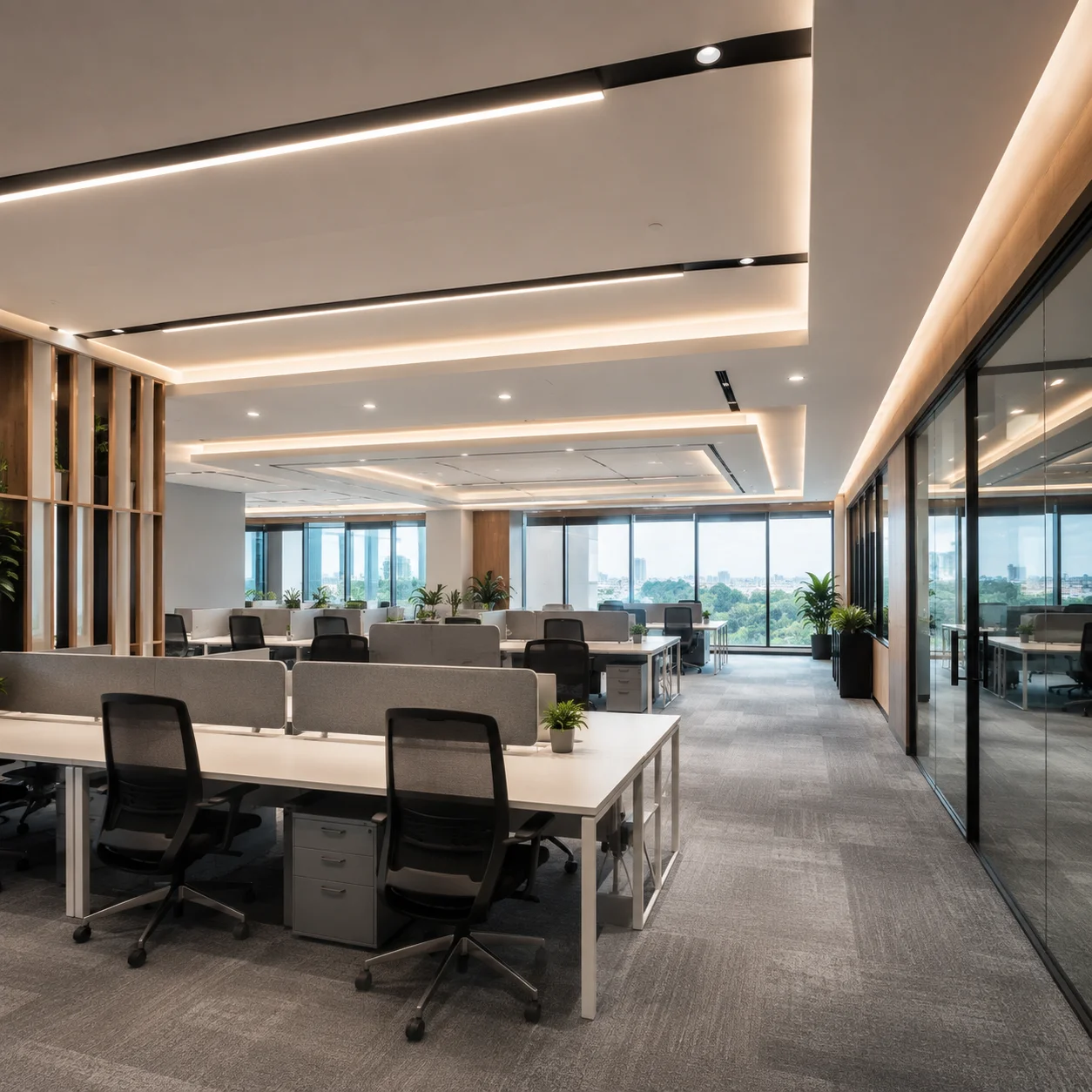
Modern office interior lighting design focuses on integration. It aligns with layouts, furniture, and office false ceiling design ideas to create a seamless workspace.
How Office Interior Lighting Design Impacts Performance and Experience?
Visual Comfort and Productivity
In many corporate and IT offices, lighting looks sufficient during installation but creates problems during daily use. A common issue is glare from overhead fixtures placed directly above screens.
This glare affects visibility and creates discomfort during long working hours. Over time, it leads to eye strain and reduced focus.
Another issue is uneven lighting distribution. Some workstations appear bright, while others feel dull. This imbalance reduces consistency in performance.
A well-planned office interior lighting design ensures uniform and glare-controlled illumination. This helps employees work comfortably without fatigue.
Lighting and Employee Comfort
Lighting directly affects how comfortable a workspace feels. If the light is too harsh, it creates irritation. If it is too soft, the space feels dull.
Clients often say they want lighting that does not cause headaches. At the same time, they do not want the office to feel dark when visitors arrive.
This balance is achieved through layered lighting. Combining ambient, task, and indirect lighting creates a comfortable environment.
Lighting and Workplace Experience
Lighting also shapes how clients perceive a space. Even with good interiors, poor lighting can make the office look dull.
Colour plays an important role here. Dark walls absorb light. As a result, the office may feel underlit even when lights are on.
Office interior lighting design must consider material and colour. This ensures the space feels bright, balanced, and premium.
Key Lighting Principles in Office Interior Lighting Design
Light Intensity and Brightness Planning
Lighting intensity should match the function of each area. Workstations need clear and comfortable brightness. Meeting rooms require adjustable lighting.
A common mistake is using the same brightness across all spaces. This creates discomfort. Some areas feel too sharp, while others feel insufficient.
Effective office interior lighting design adjusts brightness based on activity. This improves usability across the workspace.
Uniform Distribution of Light
Lighting should be evenly distributed. Uneven light creates dark patches and bright spots.
This affects visibility and comfort. Uniform lighting improves clarity and reduces fatigue.
Colour Temperature Selection
Cool light supports focus and active work. Warm light creates a relaxed environment.
Using a combination of both helps support different work modes.
Glare Control
Glare is a major issue in office lighting. It reduces visibility and creates discomfort.
Using diffused lighting and proper placement reduces glare effectively.
Alignment with Natural Light
Natural light improves mood and efficiency. Offices should use it wherever possible.
Artificial lighting should support daylight, not conflict with it.
Common Lighting Problems in Corporate Offices
Many offices face lighting issues even after installation. These problems usually come from poor planning rather than product quality.
Dark Walls Despite Bright Lighting
Clients often complain that the office still feels dark even when lights are on. This usually happens when dark wall finishes absorb light.
Lighting alone cannot fix this issue. Wall colour, ceiling design, and light placement must work together.
Lighting Feels Harsh or Causes Headache
Another common complaint is that lighting feels too strong. Direct exposure to bright light creates discomfort.
Layered lighting with indirect sources helps solve this problem.
Office Looks Bright but Still Feels Dim
In large offices, lights may be installed properly but the space still feels dull. This happens due to poor distribution.
Lighting should cover walls, ceilings, and work areas evenly.
Advanced Office Interior Lighting Design Strategies
Smart LED Lighting Systems
Smart lighting allows control over brightness and tone. It adjusts based on usage.
This improves efficiency and flexibility.
Integrated Architectural Lighting
Lighting is integrated into ceilings and walls. This creates a clean and modern look.
It also improves space planning.
Task-Oriented Lighting Systems
Task lighting focuses on specific work areas. It improves clarity and reduces strain.
This is important in IT and corporate environments.
Natural Light Optimization
Maximizing daylight improves comfort. Open layouts help distribute natural light.
This reduces dependence on artificial lighting.
Office Interior Lighting Design for Different Work Zones
Workstations and Open Offices
In corporate and IT offices, workstations require consistent and glare-free lighting. Employees spend long hours on screens.
Direct overhead lighting should be avoided. Linear or diffused lighting works better.
Alignment with desk layout improves usability.
Conference and Meeting Rooms
Meeting rooms need flexible lighting. Bright lighting works for discussions. Softer lighting works for presentations.
Explore ideas in meeting room design.
Executive Cabins
Cabins need controlled and balanced lighting. It should feel professional and comfortable.
Lighting should support both work and meetings.
Office False Ceiling Design Ideas with Lighting Integration
Lighting and ceiling design should always be planned together. In many office projects, lighting is added after ceiling work. This leads to poor alignment and uneven output.
Office false ceiling design ideas play a major role in how lighting performs. A well-designed ceiling helps distribute light properly and improves overall aesthetics.
Cove Lighting in False Ceilings
Cove lighting creates indirect illumination. It spreads light across the ceiling and reduces harsh shadows.
This works well in large corporate offices where a soft and premium look is required.
Linear Lighting Layouts
Linear lighting is widely used in modern offices. It follows the layout of workstations and walkways.
This improves visual alignment and makes the space look structured.
Recessed Lighting Concepts
Recessed lights provide clean and minimal lighting. They are commonly used in workstations and corridors.
However, relying only on recessed lighting can make the space feel flat. It should be combined with other lighting layers.
Suspended Ceiling Lighting Design
Suspended lights are used in meeting rooms and collaborative areas. They create focused lighting zones.
This also adds visual interest to the space.
Minimal Ceiling Lighting for Modern Offices
Modern offices prefer simple ceiling designs. Clean lighting layouts improve clarity and reduce visual clutter.
Proper integration ensures that lighting enhances both function and design.
How to Plan Office Interior Lighting Design?
Planning lighting is not just about selecting fixtures. It requires coordination between layout, materials, and usage.
Understand the Workspace Layout
Start by identifying different zones. Workstations, cabins, and meeting areas have different needs.
This helps define the lighting strategy.
Define Lighting for Each Zone
Each space should have its own lighting approach. Using the same lighting everywhere reduces effectiveness.
Zoning improves comfort and usability.
Integrate Lighting with Ceiling and Design
Lighting should align with ceiling patterns and furniture layout. This creates a clean and structured look.
It also improves performance.
Coordinate with Electrical and MEP Systems
Lighting design must work with technical systems. Poor coordination leads to execution issues.
Proper planning avoids rework.
For better planning understanding, visit office space planning guide.
Common Office Lighting Design Mistakes
Most lighting issues in offices are not due to product quality. They come from planning mistakes.
Using Only Ceiling Lights
Many offices depend only on ceiling lighting. This creates flat and uncomfortable illumination.
Layered lighting always performs better.
Ignoring Wall Reflection
Dark walls absorb light. This makes the office feel dull even when lights are on.
Lighting should be planned along with material selection.
Improper Fixture Placement
Lights placed directly above screens create glare. This affects productivity.
Placement should align with workstation layout.
No Zoning Strategy
Different areas need different lighting. Using one setup everywhere reduces effectiveness.
Zoning improves both comfort and functionality.
Energy Efficiency and Smart Lighting in Offices
Energy efficiency is an important factor in modern offices. Lighting systems should reduce unnecessary power usage.
LED lighting is widely used because it consumes less energy. It also lasts longer.
Smart lighting systems improve control. Sensors adjust lighting based on occupancy and daylight.
This reduces energy waste and improves efficiency.
Creating Experience-Driven Workspaces Through Lighting
Lighting is not only functional. It shapes how people experience a space.
A well-lit office feels comfortable and professional. It creates a positive impression on clients.
At the same time, it supports employees during long working hours.
Office interior lighting design should balance comfort, usability, and visual appeal.
Office Interior Lighting Design by Arc Pacific Interiors
Arc Pacific Interiors focuses on creating performance-driven office environments. Based in New Delhi, the firm delivers integrated interior solutions for corporate and retail spaces.
In many office projects, lighting issues appear after completion. These include glare, uneven brightness, and poor ambience. Arc Pacific Interiors addresses these challenges during the design stage.
Under the leadership of Mr. Prashant Wadhwa, the team brings over 16 years of industry experience. His expertise includes corporate interiors, turnkey execution, and seamless MEP coordination.
Each project is planned with attention to layout, materials, and lighting interaction. This ensures that the workspace performs well in daily use.
Arc Pacific interiors
Address: SF-235, D MALL, KRISHNA APRA, Plot No 1, Niti Khand 3, Shakti Khand 2, Indirapuram, Ghaziabad, Uttar Pradesh 201014
Phone: 083681 33119
https://maps.app.goo.gl/jetMJdQaaJkaD1P56
Explore their services in office interior design in Delhi and complete solutions in turnkey office interiors.
FAQs
What is the best lighting setup for offices?
A combination of ambient, task, and indirect lighting works best.
Why does an office feel dark even with lights?
This usually happens due to dark surfaces absorbing light or poor distribution.
How to reduce glare in office lighting?
Use diffused lighting and avoid placing lights directly above screens.
What lighting is suitable for long working hours?
Balanced and glare-free lighting helps reduce strain and improves comfort.