
Choosing the right flooring is important in any commercial setup. It impacts both function and visual appeal. Many businesses today prefer office wooden flooring for a clean and professional look. It also creates a warm and welcoming environment for employees and clients.
In modern workplaces, design decisions go beyond furniture. Flooring works together with elements like layout, lighting, and even office false ceiling design ideas to shape the overall experience. Because of this, selecting the right wooden flooring type becomes a strategic decision.
Different materials offer different benefits. Some are better for heavy footfall. Others work well in premium spaces. This guide explains the most suitable wooden flooring options for commercial use. It also helps you choose based on performance, cost, and maintenance.
Why Choose Office Wooden Flooring for Commercial Spaces?
Wooden flooring continues to be a preferred choice in offices. It balances style and durability. As a result, it fits both modern and traditional interiors.
First, it enhances the visual appeal of the workspace. Natural textures create a calm environment. This helps improve focus and productivity. In addition, wooden finishes match well with glass partitions and ceiling concepts.
Second, commercial wooden flooring is built to handle regular use. Many options are designed for high traffic areas. So, they perform well in busy offices, retail stores, and co-working spaces.
Another advantage is maintenance. Most modern wood flooring options are easy to clean. With proper care, they retain their finish for years. Therefore, they become a long-term investment.
Types of Office Wooden Flooring Options
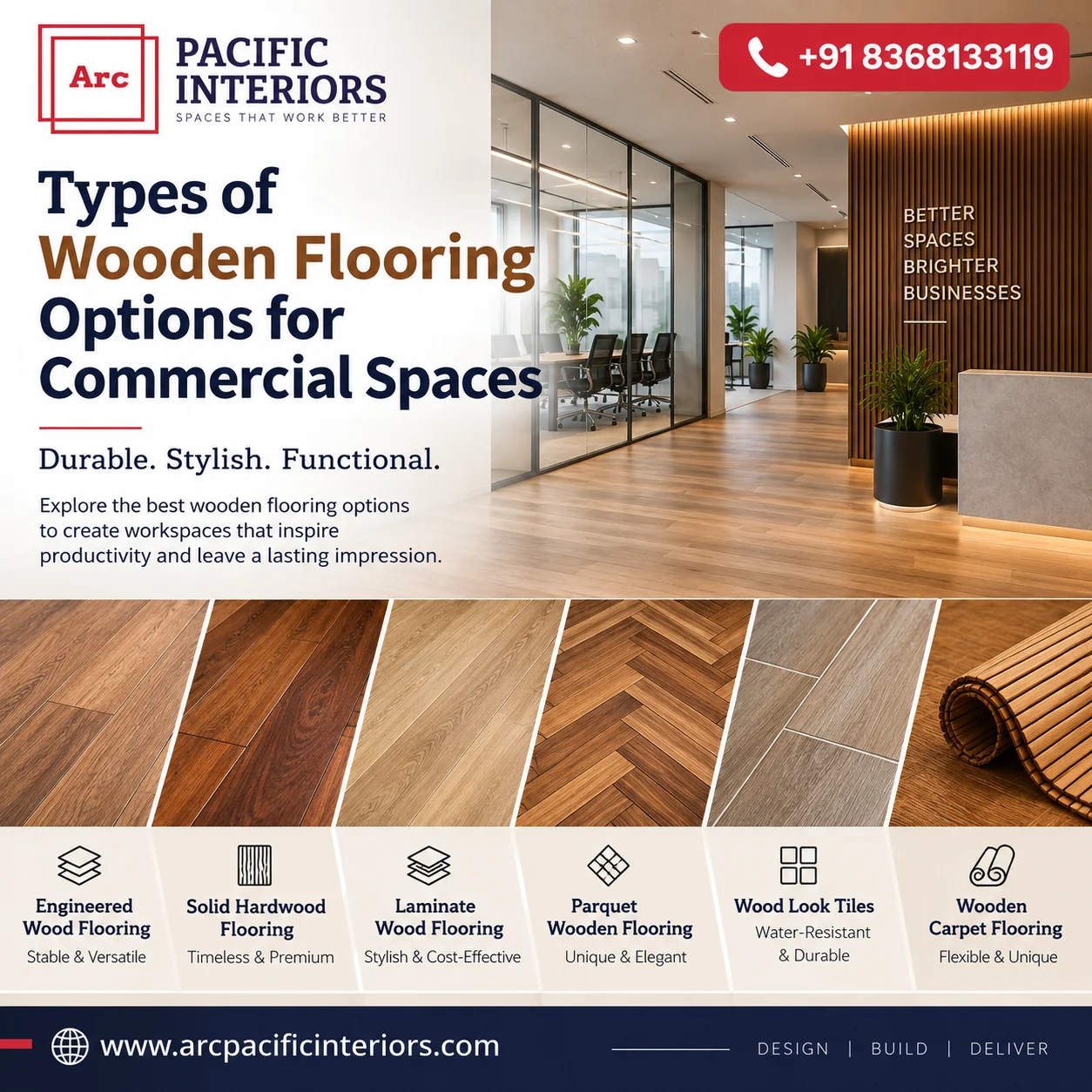
There are several types of wooden flooring available for commercial spaces. Each type serves a different purpose. The right choice depends on usage, budget, and design preference.
Engineered Wood Flooring for Office Use
Engineered wood is one of the most popular choices today. It is designed with multiple layers. The top layer is real wood, while the base layers provide stability.
Because of this structure, it handles temperature changes well. It also resists moisture better than solid wood. This makes it suitable for offices in different climates.
Advantages of Engineered Wood Flooring
It offers a natural wood appearance. At the same time, it provides better stability. It is also easier to install on existing surfaces. In addition, it requires less maintenance compared to traditional hardwood.
Solid Hardwood Flooring for Commercial Spaces
Solid hardwood is known for its premium look. It is made from a single piece of natural wood. This gives it a rich and timeless finish.
It works best in executive areas. For example, boardrooms and private cabins often use this type of flooring. It adds a strong visual identity to the space.
Advantages of Solid Hardwood Flooring
It has a long lifespan. It can also be sanded and refinished multiple times. Because of this, it maintains its appearance for many years. It also adds value to commercial properties.
Laminate Wood Flooring for Office Interiors
Laminate flooring is a practical alternative. It gives the appearance of wood without using solid timber. It is created using layered materials with a protective surface.
This makes it suitable for high traffic zones. Areas like reception spaces and workstations often use laminate flooring.
Advantages of Laminate Flooring
It is resistant to scratches and dents. It is also easy to clean. In addition, it is more affordable than other options. Therefore, it is ideal for budget-conscious projects.
Parquet Wooden Flooring for Office Design
Parquet flooring focuses on design and pattern. It uses small wooden pieces arranged in geometric layouts. As a result, it creates a strong visual impact in commercial interiors.
This type of flooring works well in premium areas. For example, reception zones, galleries, and boutique offices often use parquet designs. It also complements creative layouts and modern ceiling concepts.
Advantages of Parquet Flooring
It offers unique patterns like herringbone and chevron. It enhances the visual depth of large spaces. In addition, it is available in different wood finishes. Therefore, it supports customized office themes.
Wood Look Tiles for Commercial Spaces
Wood look tiles combine the appearance of wood with the strength of tiles. They are made from ceramic or porcelain materials. However, they are designed to replicate real wood textures.
Because of their durability, they are suitable for moisture-prone areas. Spaces like washrooms, cafeterias, and entrance zones benefit from this option.
Benefits of Wood Look Tiles
They are resistant to water and stains. They also handle heavy foot traffic with ease. In addition, they require very low maintenance. So, they are a practical choice for busy commercial environments.
Wooden Carpet Flooring (Flexible Wood Flooring)
Wooden carpet flooring is a flexible solution. It is made from thin wooden strips arranged in a roll-like format. This allows easy installation and removal.
It is often used in temporary setups. For instance, exhibition spaces and event zones can benefit from this flooring type. It also adds a unique texture to interiors.
Advantages of Wooden Carpet Flooring
It is easy to install and replace. It offers flexibility for short-term use. In addition, it provides a warm wooden feel without permanent installation.
How to Choose the Best Wooden Flooring for Office?
Selecting the right office wooden flooring depends on several factors. Each workspace has different requirements. Therefore, a practical approach helps in making the right decision.
First, consider foot traffic. High movement areas need durable surfaces. Engineered or laminate options perform well in such cases. On the other hand, low traffic zones can use premium materials.
Next, evaluate maintenance needs. Some flooring types require regular polishing. Others are easier to clean. So, choose based on available maintenance resources.
Budget also plays a key role. While solid hardwood offers a premium look, laminate provides a cost-effective alternative. Therefore, balancing design and cost is important.
Moisture exposure is another factor. Areas near entrances or pantry zones may face spills. In such cases, moisture-resistant options work better.
Along with flooring, overall planning matters. Elements like layout and office space planning improve functionality. As a result, flooring performs better in the long run.
Cost of Office Wooden Flooring in Commercial Spaces
The cost of office wooden flooring varies based on multiple factors. Material selection is the primary factor. Solid hardwood costs more compared to laminate or engineered wood.
Installation also affects the total cost. Some flooring types require specialized installation. Therefore, labor charges may increase depending on complexity.
In addition, maintenance costs should be considered. Flooring that needs regular refinishing may increase long-term expenses. On the other hand, low-maintenance options reduce ongoing costs.
Project scale also influences pricing. Larger commercial areas may benefit from better cost efficiency per square foot.
Maintenance Tips for Commercial Wooden Flooring
Proper maintenance extends the life of wooden flooring. It also keeps the surface looking fresh and clean.
Regular cleaning is important. Dust and debris can damage the surface over time. Therefore, daily sweeping or vacuuming helps maintain the finish.
Use protective pads under furniture. This prevents scratches during movement. In addition, avoid excessive water while cleaning.
Periodic inspection also helps. Small issues can be fixed early. As a result, larger repairs can be avoided.
Best Applications of Wooden Flooring in Offices
Different office areas require different flooring approaches. Choosing the right type improves both function and design.
Reception areas benefit from premium finishes. They create a strong first impression. Therefore, parquet or hardwood flooring works well here.
Workstations need durable options. Laminate or engineered flooring performs well in high usage zones. It also supports easy maintenance.
Conference rooms often use balanced designs. A mix of aesthetics and comfort is important. Flooring should also match ceiling and lighting concepts.
Retail and co-working spaces require flexible solutions. Flooring should handle constant movement. At the same time, it should maintain visual consistency.
About Arc Pacific Interiors
Arc Pacific Interiors is an interior design and contracting firm. It focuses on office and retail interiors. The company provides integrated design and build solutions. These solutions combine functionality, aesthetics, and cost efficiency.
The firm is led by Project Director Mr. Prashant Wadhwa. He brings over 16 years of industry experience. His expertise includes corporate interiors, retail roll-outs, and turnkey execution. In addition, he has strong knowledge of vendor coordination and MEP integration.
Under his leadership, projects are managed with a clear process. From concept to final handover, every stage is handled carefully. This ensures quality, timely delivery, and compliance with standards.
Arc Pacific Interiors also focuses on practical design. It considers elements like flooring, layout, and ceiling planning together. For example, combining wooden flooring with well-planned ceiling systems improves both aesthetics and performance.
Businesses looking for complete solutions can explore turnkey office interior services. These services simplify execution and ensure better coordination across all stages.
Conclusion
Office wooden flooring offers a wide range of options. Each type serves a different purpose. Therefore, the right choice depends on usage, budget, and design goals.
Engineered wood, laminate, hardwood, and parquet all have their advantages. In addition, modern alternatives like wood look tiles add more flexibility. When selected carefully, these options improve both functionality and visual appeal.
A well-planned office combines flooring with other design elements. As a result, the workspace becomes more efficient and visually balanced.