
The importance of lighting in interior design goes beyond looks.
Lighting shapes how people use and view an office. It helps staff read, work on screens, meet clients, and move around safely.
Good lighting supports daily work and helps each area serve its purpose.
Plan lighting with the furniture, ceiling, and electrical layout. Do not leave it until the final stage of the project.
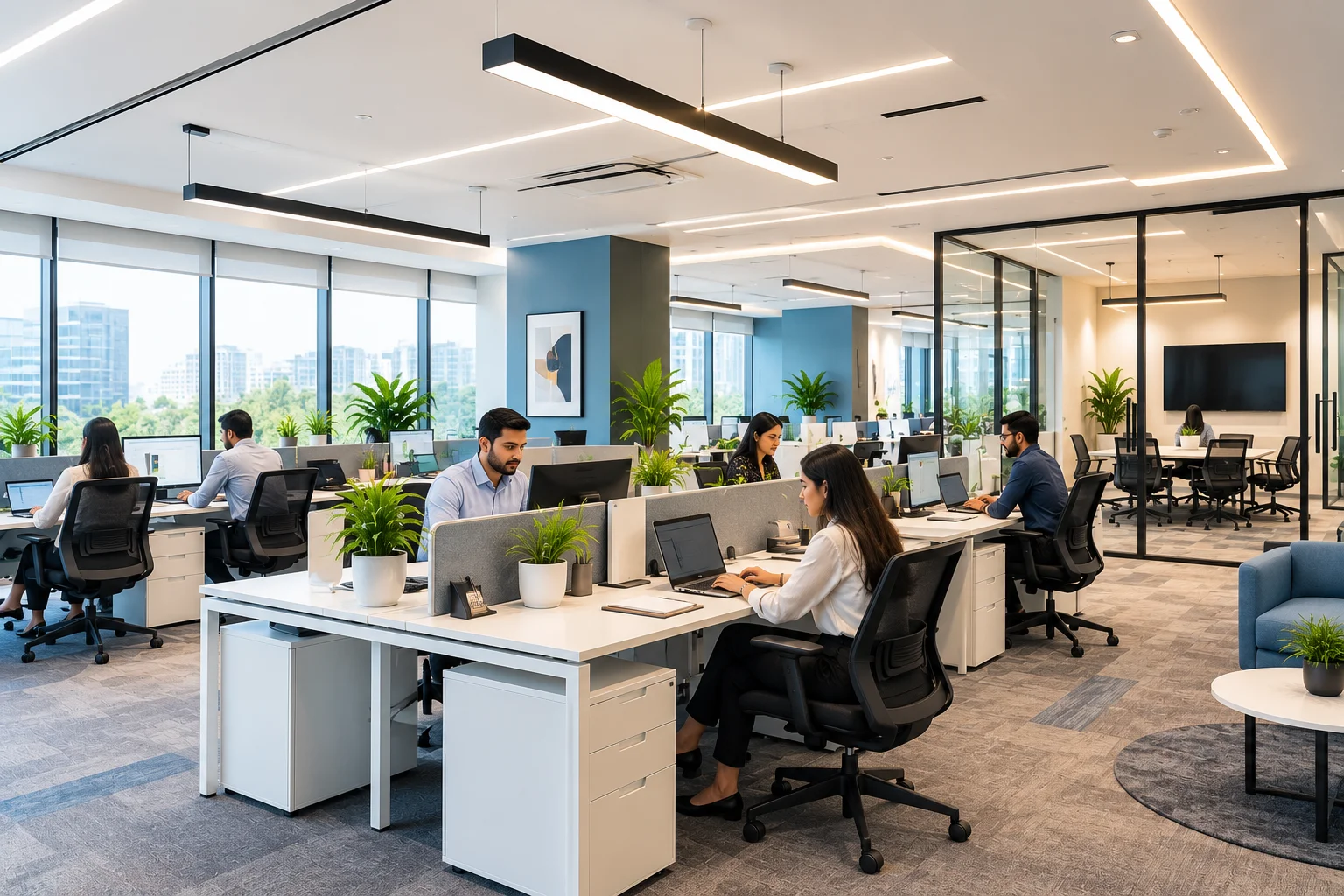
1. Improve the Look of Office Interiors
Lighting can draw attention to key parts of an office. It can highlight a reception desk, a feature wall, or the company logo. It can also bring out the texture of walls and the finish of furniture.
For example, accent lights can highlight a reception wall. Linear lights can suit a modern ceiling. Pendant lights may work well in a breakout area.
Looks are only one part of the decision. A bright fixture can cause glare if it sits in the wrong place. Check its position before choosing it.
Light also changes how colors appear. Paint, flooring, and furniture may look different under warm and cool light. Review lighting samples with material samples before you make a final choice.
2. Create a Comfortable Workplace
Each office area has its own lighting needs. Staff may use screens, read documents, review drawings, or take part in meetings. The lighting plan should support these tasks.
Poorly placed lights can reflect on screens. Strong daylight can also cause glare. Check the view from a normal seated position. Look at the desk, screen, windows, and nearby lights together.
A layered plan can meet different needs:
- Ambient lighting provides general light across the room.
- Task lighting adds focused light where a task needs it.
- Accent lighting draws attention to selected features.
These types should work together. For example, a meeting room needs light for face-to-face talks. It may also need dimming for presentations. A reception area needs clear light for staff and visitors.
For more ideas, see our meeting room design guide.
3. Match Lighting to Office Tasks
Lighting should support the work done in each area. This is a key part of good office planning.
Workstations
Map desks, screens, windows, and partitions before placing lights. Check for screen glare and dark patches on desks. If daylight causes reflections, try changing desk positions or adding suitable blinds. Simply adding brighter lights may not fix the problem.
Meeting Rooms
People should be able to see one another clearly. Lights should not cause glare on screens or video-call cameras. Separate switches or dimmers can help staff adjust the room for talks and presentations.
Reception Areas
Reception lighting should help visitors move around and allow staff to work. Accent lights can draw attention to the desk or brand wall. Avoid placing bright lights where people must look straight at them.
Breakout Areas
Breakout areas may be used for short meetings, quiet work, or breaks. Choose lights to suit these uses. Do not select fixtures based on looks alone.
4. Make Better Use of Office Space
Lighting can change how people see the size of a room. Dark corners may make an office feel smaller. Even light can help the space feel more open.
In a small office, make good use of daylight. Keep the layout clear and place lights with care. In a larger office, use separate lighting zones for desks, meeting rooms, walkways, and shared areas.
Plan fixture positions after reviewing the furniture layout. A ceiling plan may look fine on paper, but desks and screens can change how the light works in practice.
Our office space planning guide explains how layout choices affect the use of space.
5. Save Energy and Plan for Maintenance
LED lights can use less power than old-style incandescent bulbs. Actual savings depend on the lights already in place, hours of use, and control settings.
Businesses can also consider:
- Occupancy sensors for rooms that are not used all day.
- Daylight controls where natural light can reduce the need for electric light.
- Separate switches for different office areas.
- Easy access for cleaning and replacing fixtures.
- Compatible parts when using dimmers and lighting controls.
Test all controls after installation. Poorly placed sensors or confusing switches can make the system harder to use. Keep a record of fixture details and control settings for the facility team.
6. Choose Fixtures for the Office
A fixture should suit both the design and the task. Before buying, check its light output, light spread, mounting height, glare data, and access for maintenance. Make sure it works with the ceiling and electrical plan.
Color temperature is measured in kelvin (K). It affects whether light looks warm or cool. Choose it based on the work, finishes, and daylight in the space. Try to keep the look consistent across areas that connect.
Lumens and lux measure different things. Lumens show how much light a source gives out. Lux shows how much light reaches a surface. A fixture with more lumens will not always light a desk well. Height, spacing, and light direction also matter.
Ask for a lighting calculation when the project needs one. Check the finished space under real conditions. Also review the maker’s data on glare and flicker before you choose a product.
Ceiling design affects where lights can go. Read our guide to false ceiling vs open ceiling office design before you confirm the layout.
7. Coordinate Lighting With the Interior Plan
Lighting must work with desks, ceilings, electrical points, and building services. Early planning helps the team agree on fixture positions, wiring, controls, and access for repairs.
The importance of lighting in interior design is not just about picking a fixture. The full layout must suit the way people use the office.
Arc Pacific Interiors works on corporate interiors and retail roll-outs. Its experience includes design management, turnkey fit-out work, vendor coordination, and MEP integration under Project Director Mr. Prashant Wadhwa.
Explore our turnkey office interior solutions to learn more.
Conclusion
The importance of lighting in interior design comes down to how well light supports work, comfort, and the look of an office. A good plan considers desk tasks, meeting rooms, daylight, glare, energy use, and upkeep.
Plan lighting with the furniture, ceiling, and electrical layout. This helps spot issues before installation begins. If you are planning a new office or updating an existing one, contact Arc Pacific Interiors to discuss your needs.