
Office interior timelines influence far more than aesthetics. Construction schedules affect employee productivity, relocation plans, operational continuity, budgeting, vendor coordination, and business growth strategies. When organizations underestimate project durations, they often face avoidable delays, rushed decisions, and unexpected costs.
Most office interior projects take between 6 and 20 weeks from planning to handover. However, the actual timeline depends on office size, project scope, design complexity, material procurement, approvals, and execution requirements. Businesses that start with a structured office space planning process are typically better positioned to avoid scheduling conflicts and costly changes later in the project.

What Is the Average Timeline for an Office Interior Project?
Most office interior projects follow a sequence that includes planning, design development, procurement, construction, furniture installation, and final inspections.
Typical Timeline by Office Size
| Office Size | Typical Timeline |
|---|---|
| Up to 1,000 Sq Ft | 3–6 Weeks |
| 1,000–3,000 Sq Ft | 6–10 Weeks |
| 3,000–5,000 Sq Ft | 8–12 Weeks |
| 5,000+ Sq Ft | 12–20 Weeks |
Timeline by Project Type
| Project Type | Typical Timeline |
|---|---|
| Office Refurbishment | 2–6 Weeks |
| Small Office Fit-Out | 4–8 Weeks |
| Medium Office Fit-Out | 8–12 Weeks |
| Large Corporate Workspace | 12–20 Weeks |
| Multi-Floor Office Project | 16–24 Weeks |
How Long Does Each Phase of an Office Interior Project Take?
| Project Phase | Typical Duration |
|---|---|
| Requirement Gathering & Planning | 1–2 Weeks |
| Design Development | 1–3 Weeks |
| Material Procurement | 2–6 Weeks |
| Civil & MEP Work | 3–8 Weeks |
| Furniture Installation | 1–2 Weeks |
| Testing & Handover | 2–5 Days |
Why Office Interior Timelines Vary Between Projects?
A company with 20 employees and a single meeting room will naturally have a very different project timeline than an organization planning multiple departments, executive cabins, training rooms, and collaborative work areas.
Project duration is influenced by the number of spaces being created, the level of customization involved, and the amount of infrastructure work required within the office.
For example, a technology startup may prioritize open workstations and collaboration zones, while a consulting firm may require private offices and multiple client meeting rooms. Legal firms often need partner cabins, consultation areas, and secure document storage facilities, all of which add planning and execution requirements. Businesses evaluating workplace layouts for legal practices can review examples of law office interior planning considerations to better understand how specialized requirements influence timelines.
Office Interior Timeline by Office Size
Small Offices (Up to 1,000 Sq Ft)
Smaller offices generally involve fewer partitions, simplified electrical layouts, and standard furniture systems. As a result, execution is usually faster and easier to coordinate.
Many startups and growing businesses explore efficient small office interior design solutions to maximize functionality without increasing project complexity.
Medium Offices (1,000–5,000 Sq Ft)
Medium-sized workplaces often include meeting rooms, executive cabins, reception areas, collaborative spaces, and departmental zones. These projects require more coordination between designers, suppliers, and contractors.
Large Corporate Offices (5,000+ Sq Ft)
Large offices frequently include multiple departments, boardrooms, training facilities, cafeterias, breakout areas, and advanced technology infrastructure. Such projects are particularly common in Gurgaon’s corporate workspace clusters, where businesses often require phased execution to reduce operational disruptions during expansion or relocation.
How Project Scope Influences Office Interior Timelines?
Two offices of the same size can have completely different timelines if one requires extensive MEP work, custom furniture, or specialized meeting spaces.
Office Refurbishment Projects
Refurbishments typically focus on upgrading flooring, lighting, paint finishes, furniture, and branding elements. Since structural modifications are limited, completion timelines are usually shorter.
Full Office Renovation Projects
Renovations often involve layout changes, infrastructure upgrades, new finishes, and improved workplace functionality. These projects generally require additional planning and coordination.
New Office Fit-Out Projects
Fit-out projects transform an empty commercial space into a fully functional workplace by incorporating partitions, electrical systems, HVAC infrastructure, networking, workstations, and employee amenities.
Office Relocation Projects
Relocations require careful coordination because construction activities, technology migration, employee movement, and occupancy planning often occur simultaneously.
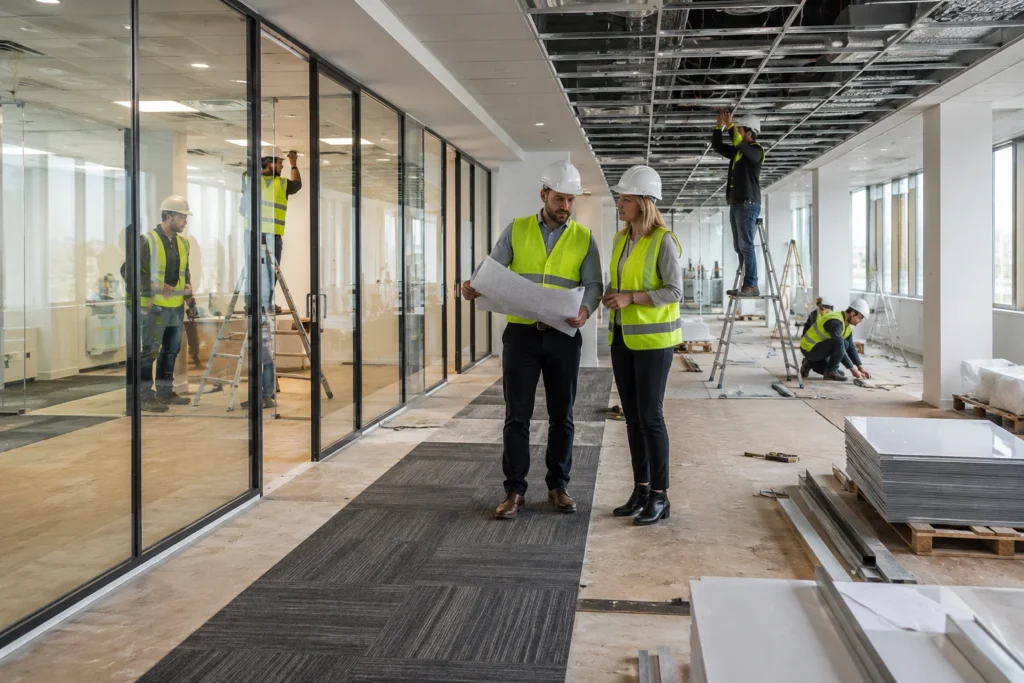
A Step-by-Step Breakdown of an Office Interior Project Timeline
Requirement Gathering and Site Assessment
The process begins by evaluating workforce requirements, operational goals, future growth plans, and departmental structures. Site assessments help identify constraints before design work begins.
Space Planning and Concept Development
Workstation layouts, circulation paths, meeting rooms, breakout spaces, and support functions are planned during this stage. Well-executed space planning often prevents costly changes later.
Design Finalization and Budget Approval
Design drawings, material specifications, furniture selections, and project budgets are finalized before procurement activities begin.
Material Selection and Procurement
Procurement delays are one of the most common reasons office interior projects exceed their original timelines, particularly when custom furniture or imported materials are involved.
In many office projects, workstation manufacturing, storage systems, and custom conference tables require several weeks of production time. Businesses that wait until construction begins to finalize furniture specifications often experience avoidable delays.
Approvals and Compliance Requirements
Building management approvals, fire safety compliance, occupancy requirements, and electrical approvals must often be completed before major construction activities proceed.
Civil Work and Partition Installation
Cabins, drywall systems, partitions, and structural modifications are completed during this stage.
Electrical, HVAC, and MEP Work
Mechanical, electrical, and plumbing systems are integrated throughout the workspace.
In multi-floor office projects, MEP coordination frequently becomes one of the most time-sensitive stages because multiple teams work simultaneously. Delays at this point often affect several downstream activities.
Flooring, Ceiling, and Finishing Activities
Flooring systems, false ceilings, wall finishes, paint applications, and decorative elements are installed to create the final workplace environment.
Furniture Installation and Workspace Setup
Workstations, storage systems, collaboration furniture, and conference room equipment are installed.
Organizations focused on collaboration often dedicate additional planning effort to meeting room layouts and functionality because these spaces directly influence communication and productivity.
Final Inspection and Handover
All systems are tested, quality inspections are completed, and remaining issues are resolved before occupancy.
Factors That Affect Office Interior Project Timelines
Office Size and Complexity
Larger offices require more labor, materials, coordination, and quality checks.
Custom Design Requirements
Custom workstations, acoustic treatments, branding installations, and specialty finishes typically increase project duration.
Material Availability
Procurement schedules vary significantly depending on supplier lead times and manufacturing requirements.
Approval Processes
Building regulations, safety requirements, and landlord approvals can influence overall project schedules.
Changes During Execution
Layout changes after furniture orders, electrical layouts, or partition drawings have been approved usually result in rework, revised procurement schedules, and extended completion timelines.
Common Reasons Office Interior Projects Get Delayed
Frequent Design Revisions
Late-stage design changes remain one of the leading causes of schedule extensions.
Procurement Delays
Supply chain disruptions can affect furniture, flooring systems, lighting fixtures, and specialized materials.
Budget Changes During Execution
Budget revisions often require alternative materials and revised specifications.
Approval and Documentation Delays
Approval timelines, procurement challenges, and stakeholder coordination are particularly important in large metropolitan markets such as Delhi’s commercial office sector, where projects often involve multiple consultants and vendors.
Vendor Coordination Issues
Projects involving numerous contractors and suppliers can experience scheduling conflicts if communication channels are not clearly defined.
Project Management Practices That Help Keep Projects on Schedule
Clear Milestones
Defining milestones creates accountability and improves visibility throughout the project lifecycle.
Early Procurement Planning
Ordering long-lead materials before construction begins helps reduce scheduling risks.
Regular Progress Reviews
Weekly project reviews allow teams to identify bottlenecks before they affect completion dates.
Proactive Risk Management
Reviewing procurement schedules, approval requirements, and material availability before site work begins helps project teams address potential delays before they affect construction activities.
One practical lesson observed across many office projects is that decision-making speed often has a greater impact on timelines than construction itself. Delays in approving layouts, materials, or furniture specifications can quickly extend project schedules.
Businesses planning office relocations frequently underestimate the time required for IT infrastructure migration, network setup, workstation testing, and technology integration. Including these activities within the project schedule helps avoid last-minute disruptions.
Organizations seeking deeper insight into scheduling strategies can explore the importance of project timelines in office interiors.
How Different Project Delivery Models Affect Timelines?
Traditional Multi-Vendor Execution
Separate designers, contractors, and suppliers provide flexibility but often require additional coordination.
Design and Build Approach
Combining design and execution responsibilities can streamline communication and reduce project handover delays.
Turnkey Project Delivery
A turnkey approach centralizes planning, procurement, and execution under a coordinated workflow. Organizations evaluating this model can review what is typically included in a turnkey office interior project.
Understanding the benefits of integrated project delivery can also help businesses determine whether this approach aligns with their operational requirements.
Office Interior Timeline Examples Based on Project Scope and Size
Example 1: Startup Office
A 900 sq ft office with open workstations, a meeting room, and standard furniture may require approximately 4–6 weeks.
Example 2: Mid-Sized Corporate Workspace
A 3,500 sq ft office with multiple cabins, conference rooms, collaboration zones, and custom furniture may require 8–12 weeks. Similar workplace transformation projects are increasingly common in Noida’s growing commercial districts, where companies frequently balance rapid expansion with long-term workplace planning.
Many organizations investing in workplace upgrades are also prioritizing employee experience, flexibility, and modern work environments. This trend is reflected in the growing adoption of modern office interior strategies in Noida.
Example 3: Large Enterprise Office
A 10,000 sq ft workspace involving extensive MEP systems, executive cabins, collaboration areas, and custom furniture may require 16–20 weeks or more.
Reviewing a company’s completed workplace projects and portfolio can also help businesses understand how project size and complexity influence realistic execution timelines.
Office Interior Project Planning Checklist
| Planning Task | Recommended Timing |
|---|---|
| Space Planning | Before Design Development |
| Budget Approval | Before Procurement |
| Material Selection | Before Construction |
| Vendor Coordination | Before Execution |
| Risk Assessment | Before Site Work Begins |
Planning Ahead Leads to Better Project Outcomes
Office interior projects rarely face delays because of a single issue. More often, delays occur when procurement planning, approvals, design decisions, and execution activities are not aligned from the beginning.
Businesses that establish realistic schedules, finalize key decisions early, and maintain clear communication throughout the project are generally more likely to complete workplace transformations without major disruptions, cost overruns, or last-minute compromises.
Frequently Asked Questions
How long does a small office interior project take?
Most small office projects take between 3 and 6 weeks.
How long does a 5,000 sq ft office fit-out take?
Typically between 10 and 16 weeks depending on complexity.
What phase usually takes the longest?
Procurement and MEP coordination are often the most time-consuming stages.
Does custom furniture increase project timelines?
Yes. Custom furniture manufacturing frequently adds additional lead time.
How long does office furniture manufacturing take?
Depending on specifications, it may take anywhere from 2 to 8 weeks.
Why do office interior projects get delayed?
Common reasons include design revisions, procurement issues, approval delays, and coordination challenges.
Can employees continue working during renovations?
In some cases, phased execution allows business operations to continue.
Do turnkey projects save time?
They often reduce coordination-related delays by consolidating project responsibilities.
How early should businesses start planning?
Ideally, planning should begin several months before the intended move-in or completion date.
Final Thoughts
Office interior project timelines depend on planning quality, procurement schedules, approvals, construction complexity, and workplace requirements. Smaller projects can often be completed within a few weeks, while larger corporate environments may require several months of coordinated effort.
Businesses that focus on realistic scheduling, early procurement planning, and timely decision-making are generally more likely to complete projects without major disruptions or unexpected cost increases.
Understanding how each phase contributes to the overall timeline allows organizations to make informed decisions and create workplaces that support long-term growth, employee satisfaction, and operational efficiency.